MEMORANDUM OF UNDERSTANDING
BETWEEN
THE MINISTRY OF ARTIFICIAL INTELLIGENCE AND DIGITAL DEVELOPMENT OF THE REPUBLIC OF KAZAKHSTAN
AND
THE DEPARTMENT OF COMMUNICATION AND DIGITAL TRANSFORMATION, OFFICE OF THE PRIME MINISTER OF VANUATU
ON COOPERATION IN THE FIELD OF ICT AND E- GOVERNMENT SERVICES
The Ministry of Artificial Intelligence and Digital Development of the Republic of Kazakhstan (MAIDD) and the Department of Communication and Digital Transformation, Office of the Prime Minister of Vanuatu (DCDT) (hereinafter referred to separately as "Participant" and jointly as "Participants"),
CONSIDERING the important role of science, technology and information communication technology (ICT) as the main drivers of socioeconomic development in the two countries.
RECOGNIZING that cooperation based on equity, friendship, and mutual benefit will be mutually beneficial for the ICT and e-government development of both Participants.
DESIRING to develop cooperation in the field of e-government and implementation of advanced technologies on a long-term and mutually beneficial basis to promote economic and social development of the Participants,
INTENDING to contribute to the reduction of the digital divide affecting the two
countries,
Have reached the following understanding:
1
Objectives
This Memorandum of Understanding (MoU) aims to facilitate cooperation between the Participants in the development, implementation, and advancement of ICT and e-government initiatives for the mutual benefit of both Participants.
2
Scope of Cooperation
1. The Participants intend to collaborate in the following areas:
a) Digital Infrastructure Development
b) E-Government Initiatives
c) Knowledge and Best Practice Sharing in ICT and E-government Policy Development.
d) Capacity Building and Knowledge Transfer
2. Other areas of mutual interest, such as audit and process reengineering, may be defined by the Participants.
3
Forms of Cooperation
The Participants intend to cooperate in the field of ICT in the following ways:
a) MAIDD will provide advisory and consultative support on methodology and technical architecture for effective use of digital technologies, re-engineering and digital transformation of public administration.
b) Each participant will organize assessment missions to learn about the other Participant's technology infrastructure.
c) Mutual support and cooperation in ICT human resources: the Participants will facilitate the exchange of expertise, training programs, and capacity-building initiatives to enhance the skills of ICT personnel in both countries.
d) The Participants will identify the various digital needs of DCDT, and MAIDD will assist in the provision of relevant digital solutions.
e) The Participants will work together to advance e-government solutions in both countries, share knowledge on successful implementations, and explore opportunities for joint projects.
f) Any other forms of cooperation that may be mutually defined by the Participants.
4
Activities
1. The Participants will promote and support cooperation through the following
activities:
a) Meetings between high-level officials from both countries to discuss
agendas of mutual interest;
b) Planning and implementation of joint IT projects for adopting new
technologies and digitalization concepts;
c) Mutually beneficial exchanges of technology and policy information in
accordance with guidelines set by the Participants from time to time;
d) Transfer from MAIDD to DCDT of programs, applications, techniques and
other digital tools for e-government under bilateral development assistance or through
Kazakh development institutions such as the Kazakhstan Agency of International
Development «KazAID ».
e) Exchanges between experts from the two countries; and
f) Any other forms of cooperation that may be jointly specified by the
Participants. :
2: The Participants may enter into separate agreements to specify the
modalities of collaboration, including the activities to be undertaken and the timelines for
implementation. ’
3 All activities to be conducted pursuant to this MoU will take the utmost
account of the sovereign interests of both Participants, in particular in relation to the
sensitivity of the information made available to the other Participant.
5
Joint Implementation committee
The Participants will establish a Joint Implementation Committee (JIC),
composed of representatives from both Participants. The JIC will meet regularly, either
in person or virtually, to oversee the implementation of this MoU, address challenges, and
make decisions by mutual consent.
6
Funding and Resources
1. Each Participant will be responsible for its own costs related to its
participation in this MoU and will be solely responsible for the determination of the level
of its investment in the activities developed under this MoU.
2; Any third-party costs incurred in connection with the implementation of
this MoU will be borne by the Participant incurring costs, unless otherwise agreed upon
in writing by the Participants.
3: The conduct of activities under this MoU will be subject to the availability
of funds and other resources of the Participants.
7
Intellectual Property Rights and Confidentiality
1. Each Participant retains its intellectual property rights. Confidential
information will not be disclosed to any third party without the prior written consent of
the disclosing Participant.
2. Each Participant will take appropriate measures to protect the
confidentiality of the other Participant’s intellectual property, including trade secrets and
proprietary information. '
g Neither Participant will issue any press release or make any public
statements regarding the purpose or outcome of this MoU, or the activities to be
performed or materials to be developed under it, without prior written consent of the
other Participant.
8
Legal Status
This MoU is not a treaty and does not create any rights and obligations for the
Participants and their States, governed by international law.
9
Settlement of Disputes
Any differences arising from the application of this MoU will be settled promptly
and amicably through consultations between the Participants.
10
Channels of Communication
All official communications under this MoU will be in writing to the following
addresses:
(a) Republic of Kazakhstan — Department of International Cooperation and
Investments, Ministry of Artificial Intelligence and Digital Development, E-mail:
(b) Republic of Vanuatu — Department of Communications and Digital
Transformation, Ministry of Prime Minister, E-mail:
11
Amendments
1. This MoU may be amended from time to time by mutual written consent of
the Participants.
2. Any amendments will not affect the validity or duration of ongoing
cooperative activities under this MoU, unless otherwise specified in writing by the
Participants.
12
Coming into effect, Duration, and Cessation
s This MoU will come into effect on the date of signature by both Participants.
2. This MoU will remain in effect for a period of 5 years, unless otherwise
specified in writing by the Participants.
3. Either Participant may cease this MoU by giving 3 months written notice to
the other Participant.
4. Cessation of this MoU will not affect the validity or duration of ongoing
cooperative activities being carried out under this MoU, unless otherwise specified in
writing by the Participants.
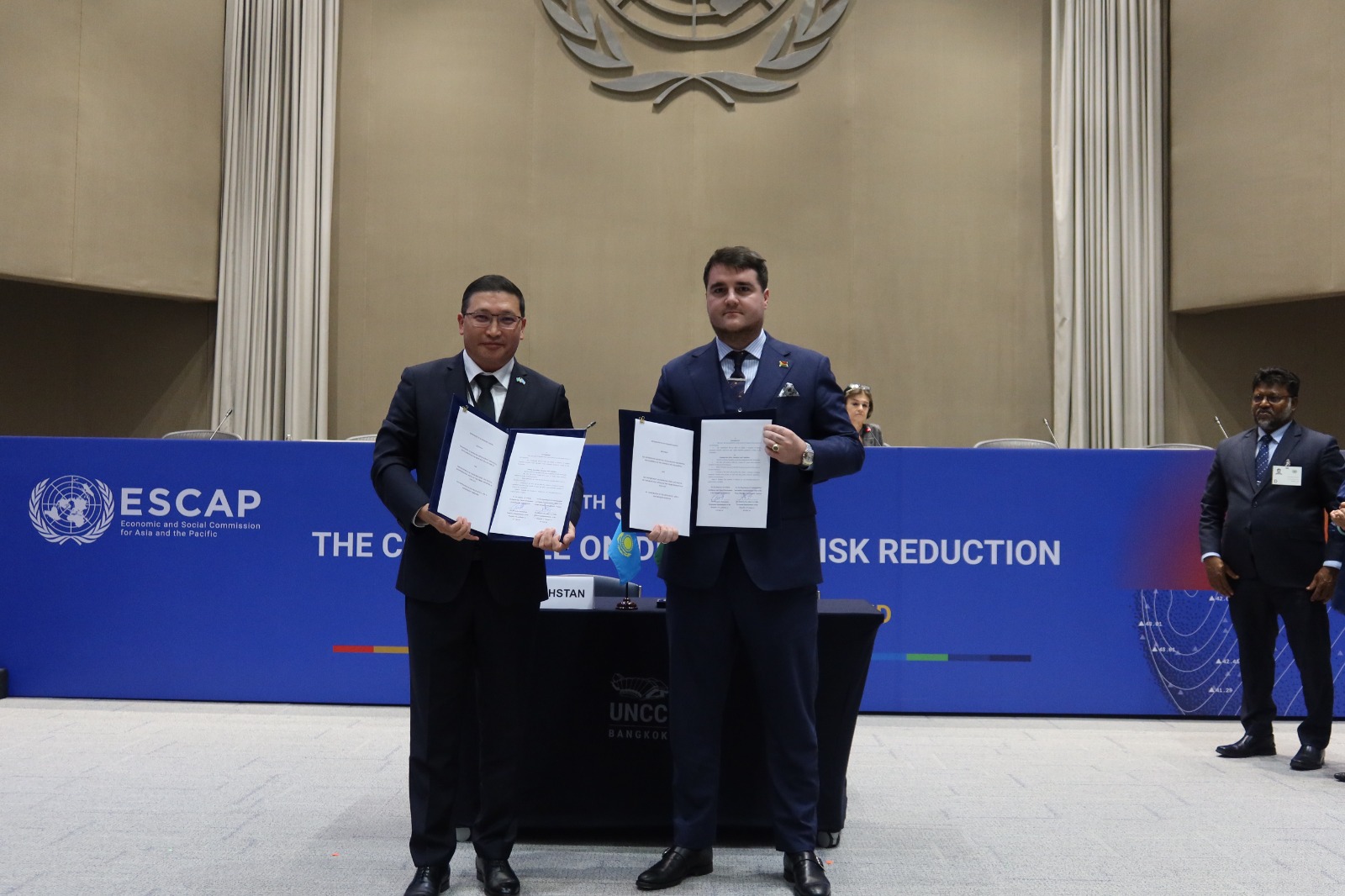
Signed in Bangkok City, Kingdom of Thailand on «26» November 2025 in two
original copies, in English.
The MOU was signed on behalf of the Government of Vanuatu by the Permanent Representative of the Republic of Vanuatu to UNESCAP (Head of Mission), Mr. Mathieu Hervillard Le Peillet. The Memorandum of Understanding (MoU) establishes a framework for ICT and e-government cooperation between Vanuatu and Kazakhstan. This partnership builds on Kazakhstan's existing support to Vanuatu in areas like climate action and the World Expo, and aims to advance digital initiatives for mutual benefit